


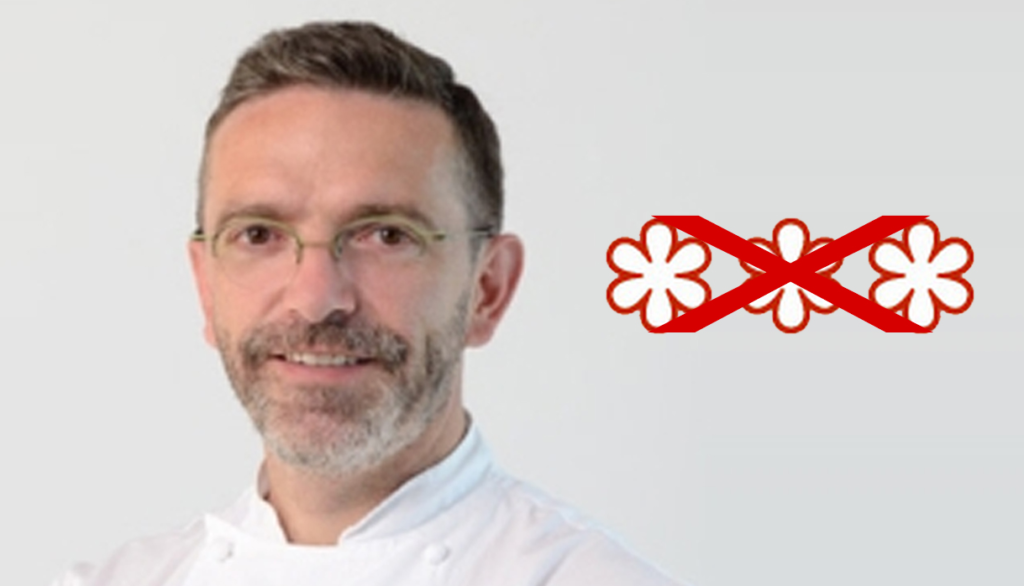
Foreign media reports have reported that restaurants selected by the Michelin Guide, a global gastronomic evaluation guide, are increasingly reluctant to register as guides, voluntarily returning “stars.” Michelin’s horoscope is a big goal and honor in the life of any chef, but it is explained that there has been a change in the perspective of chefs in this regard. According to the British daily Guardian on the 21st, the Italian restaurant “Gilio,” listed on the Michelin Guide, asked Michelin to delete the star they received in October last year. Benedetto Rulo, the co-owner of the restaurant, said, “The Michelin star was burdensome.”
“Many customers are now suspecting that it will be a restaurant with a formal atmosphere and overly sophisticated food just because they got a star rating,” he said. “The restaurant they are pursuing is a place where anyone can easily find it.” He added, “You should be able to go to a high-end restaurant in a T-shirt, sandals and shorts.”
A move to ban Michelin critics has also been spotted. French chef Marc Vera, a master of molecular cuisine, has reportedly banned Michelin critics from entering newly opened restaurants in France. This is an example of how the Michelin horoscope is no longer considered an unconditional honor.
The Guardian pointed out that once a Michelin star rating is awarded, it is likely to have been affected by the strong pressure to keep the star rating. Skye Gingell, who was the chef of Peter Sham Nurse, a restaurant selected by Michelin in London in 2011, said, “The Michelin star rating has become a curse. I pray that I will never receive it again.” After all, she became too busy after registering as a Michelin Guide after leaving the restaurant, and she suffered from complaints from customers who expected a fine dining experience contrary to her casual style. Controversy is growing over the fairness and objectivity of Michelin’s evaluation. As the printed guidebook’s profitability declined, Michelin started receiving money from tourist agencies around the world.
“Between 2016 and 2018, Michelin had to change its business model,” food critic Andy Hayler said, “because no one was buying printed guidebooks anymore, we started taking money from tourism agencies in South Korea, the United States, and China.” “There is little chance that Michelin will say ‘I’m sorry, but the restaurants are all terrible, so I can’t give you a star’ even after receiving millions of dollars from the tourism agency,” he pointed out.
However, Michelin made it clear that the process of selecting a restaurant and giving a star is working properly, and that the team in charge of sponsorship and rating is separate.
Michelin is also trying to make changes as the fine dining industry faces changes and new criticism. While trying to reflect the voices of a new generation of gourmet or influencer, Michelin also introduced a “green star” that evaluates whether “sustainable gastronomy” is practiced through eco-friendly efforts.
JULIE KIM
US ASIA JOURNAL

