


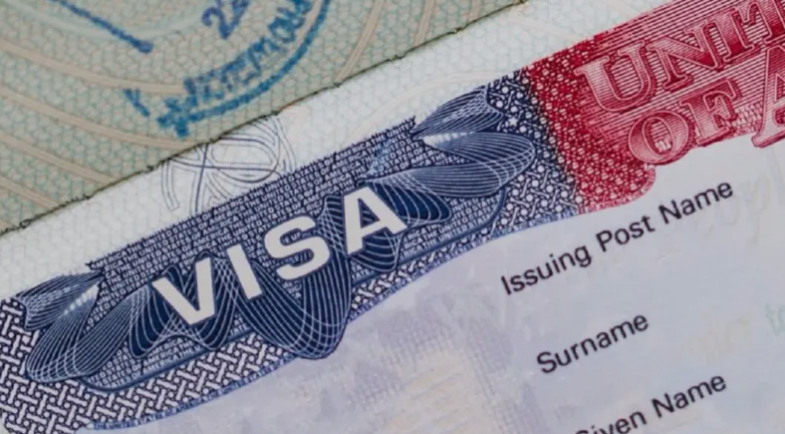
The Washington Post reported on the 12th that foreign students studying in the United States have recently deleted or deactivated social network service (SNS) posts, stayed only on campus, or avoided speaking in class.
The change came as the U.S. government of Donald Trump said it would expel “anti-Semitic” international students and foreign faculty members after anti-university protests last year. They say they are refraining from acting because they are worried that their student visas will be canceled after saying the wrong thing.
According to the NAFSA (International Educators Association), nearly 1,000 international students and scholars have had their visas revoked or federal records canceled since mid-March.
The U.S. Immigration Lawyers Association estimates that at least 4,700 international student records have been deleted since President Trump took office.
According to the Washington Post, the student body may not be aware of the change in visa status, and the government does not notify universities of all cancellations of the student’s visa. Some universities have checked the federal government’s database to find out about the changes.
Universities are now trying in all directions to figure out how many students have received the government’s decision to cancel their visas and why.
As the number of such cases gradually increases, students and scholars who are not U.S. citizens are in fear that they may be the target next.
An international student from Brazil majoring in mechanical engineering at Arizona State University said he was “frankly afraid” and became hesitant to share political views.
“I’m not an extremist in any sense, but I don’t know what’s free speech and what’s a threat to the government,” he said, adding, “I think the whole community feels that way.”
A student of Canadian and Iranian nationalities attending Georgetown University said he deactivated his account on X (formerly Twitter) because of concerns that it could affect U.S. citizenship.
“Given that everyone’s SNS is monitored, it’s not worth the risk,” he said. The student council member added that he was recently advised not to participate in certain conversations for safety reasons. A Columbia student from George Mason University said he is afraid to walk on the streets or go out in public often. The student council president also planned how to deal with his friends in case he was detained.
At least 15 student visas have already been canceled at George Mason University.
Some of the international students whose visas were canceled were arrested for participating in Palestinian protests. They had a minor history of violating traffic laws or even were victims of crime. In some cases, the reason for canceling the visa is not specified.
International student stay information is kept in the Student and Exchange Visitor Information Program (SEVIS) database of the U.S. Immigration and Customs Enforcement (ICE).
Recently, in addition to the U.S. Department of State canceling the visa, ICE is deleting SEVIS records by itself, not universities. Elimination of SEVIS records could immediately lead to loss of legal status.
Jeff Joseph of the U.S. Immigration Lawyers Association said, “The net the government is throwing now is enormous,” and pointed out that recent SEVIS termination cases are clearly illegal because they do not meet the legal requirements.
“Students should be able to continue their studies unless SEVIS is properly terminated,” he said.
“The feeling that everyone could potentially be targeted will have a tremendous cooling effect across the United States,” said Vina Duval, a professor at the University of California, Irvine.
SAM KIM
US ASIA JOURNAL

